
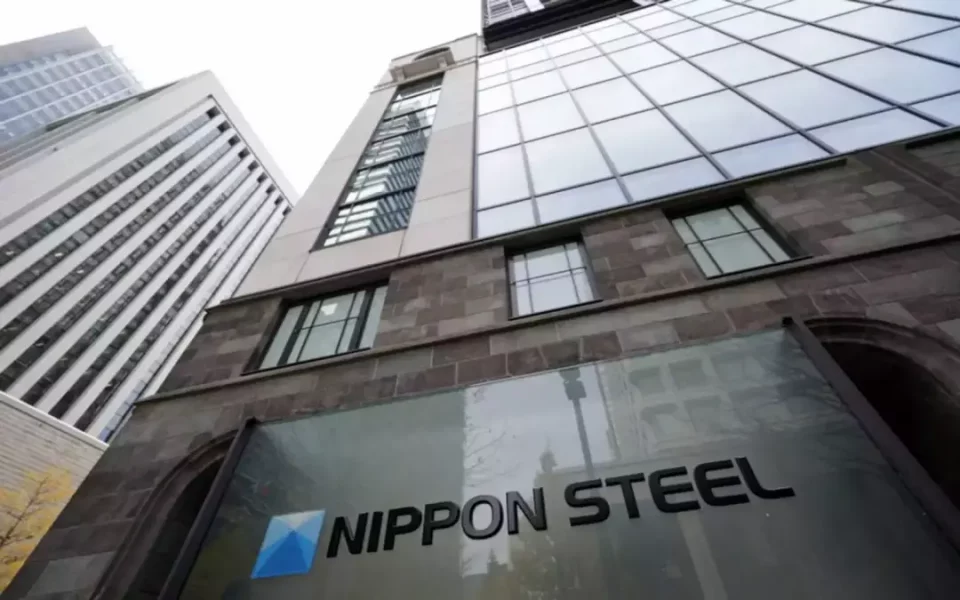
WASHINGTON — In a significant and politically charged move, President Joe Biden announced Friday that he is blocking the $14.3 billion acquisition of U.S. Steel by Japan’s Nippon Steel, citing national security concerns and the importance of preserving a strong domestic steel industry. The decision, made in the final days of Biden’s administration, underscores the enduring symbolism of U.S. Steel as a pillar of American industrial and economic history.
“As I have said many times, steel production – and the steel workers who produce it – are the backbone of our nation,” Biden said in a statement. “A strong domestically owned and operated steel industry represents an essential national security priority and is critical for resilient supply chains.”
The decision comes after more than a year of bipartisan debate, union opposition, and concerns about foreign ownership of one of America’s once-dominant industrial giants. However, critics argue that the move may do more harm than good, potentially discouraging foreign investment in other U.S. industries and exacerbating U.S. Steel’s financial struggles.
Background of the Deal
The proposed acquisition, first announced in December 2023, sparked immediate controversy. Nippon Steel, one of the largest steelmakers in the world, had planned to invest $2.7 billion in U.S. Steel’s domestic operations as part of the $14.3 billion purchase. U.S. Steel claimed that without the influx of capital, it might have to shut down several mills, jeopardizing thousands of jobs.
Founded in 1901, U.S. Steel was once a global symbol of American industrial dominance. It became the first company in the world to be valued at over $1 billion and was instrumental in building the cars, appliances, bridges, and skyscrapers that defined 20th-century America. However, the company has since experienced decades of decline and is no longer the largest U.S. steelmaker. Today, it employs around 14,000 people in the U.S., 11,000 of whom are members of the United Steelworkers (USW) union.
Opposition to the Deal
The United Steelworkers union has strongly opposed the acquisition from the outset, expressing concerns about job security at unionized mills. The union argued that Nippon Steel had not provided sufficient guarantees to protect jobs at older mills staffed by USW members.
Biden’s decision aligns with his long-standing position against the deal. President-elect Donald Trump has also voiced opposition, stating that he would have blocked the deal had it reached his desk.
Blocking the acquisition could be politically popular in key states like Pennsylvania, where U.S. Steel’s legacy still resonates with voters. However, it risks alienating foreign investors and starving U.S. Steel of the funds it needs to modernize its operations.
National Security Concerns
The Committee on Foreign Investment in the United States (CFIUS), the federal body responsible for evaluating mergers and acquisitions on national security grounds, was unable to reach a consensus on whether the deal posed a national security risk. This left the final decision in the hands of President Biden.
CFIUS includes representatives from multiple federal agencies, whose evaluations are informed by career staff tasked with conducting impartial reviews. While the majority of agencies reportedly concluded that the deal posed no significant national security threat, Biden overrode their findings, emphasizing the importance of keeping U.S. Steel under domestic ownership.
“Bad decision,” one senior administration official said of Biden’s move. “Doesn’t actually protect union jobs and may kill the company.”
Economic and Political Implications
The decision raises questions about the future of foreign investment in the U.S. While Biden blocked Nippon Steel’s acquisition of U.S. Steel on national security grounds, President-elect Trump recently welcomed a $100 billion investment from Japan’s SoftBank in U.S. artificial intelligence technology—an area arguably more critical to national security than steel production.
Critics warn that Biden’s decision could deter foreign investors from pursuing mergers, acquisitions, or other investments in American companies, particularly in industries that might be deemed politically sensitive.
Shares of U.S. Steel dropped more than 8% in pre-market trading following the announcement, reflecting investor uncertainty about the company’s future.
The Path Ahead
Both U.S. Steel and Nippon Steel have vowed to challenge the decision in court, arguing that the deal is essential for the survival and modernization of U.S. Steel’s domestic operations. Without the proposed $2.7 billion investment, U.S. Steel may struggle to remain competitive in the global steel market.
Meanwhile, the move is seen as a defining moment for CFIUS, which has traditionally operated independently of political influence. The decision to override the committee’s findings may set a precedent for future administrations to use CFIUS as a political tool rather than a purely security-focused body.
Biden’s decision, while framed as a defense of American jobs and national security, has drawn criticism even within his own administration. As one official noted, “This decision was political in nature, and it’s unclear whether it will actually achieve the desired outcomes.”
For now, the future of U.S. Steel remains uncertain, with its financial stability and role in the American economy hanging in the balance.
